Gerhard Richter: Paintings from Private Collections
Category: Books,Arts & Photography,History & Criticism
Gerhard Richter: Paintings from Private Collections Details
Curator Robert Storr has said of the iconic, inscrutable German painter Gerhard Richter, "He's not playing hard to get, he's doing something that is hard to get.'' The difficulty arises from a Conceptualist oeuvre that style-jumps from Photorealism to large, abstract compositions. Martha Schwendener has summed up Richter's contribution by stating, "Seeing Gerhard's abstraction and Photorealism together, you realize that this dual body of work is the perfect expression of what it means to paint today--and what a contemporary master might be." Whatever the style, Richter's subject is always painting itself. Because it features more than 80 works from important private collections, including the artist's own, this monograph provides a unique contextualization of the artist's incredibly influential career, which, spanning more than 40 years, mirrors not only the history of postwar Germany, but also the medium of painting.


Reviews
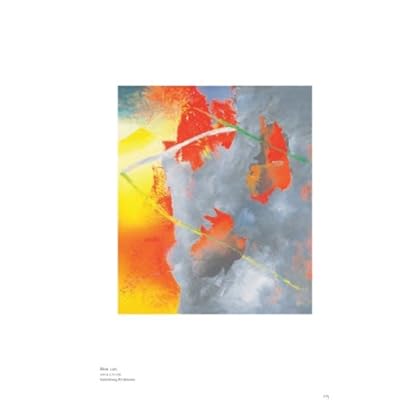
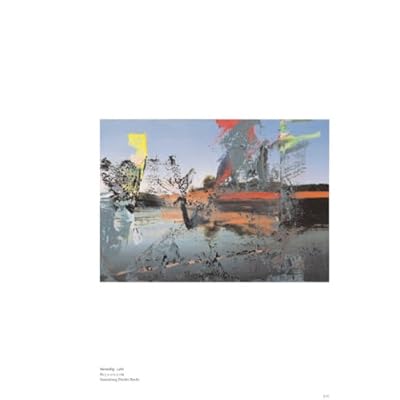
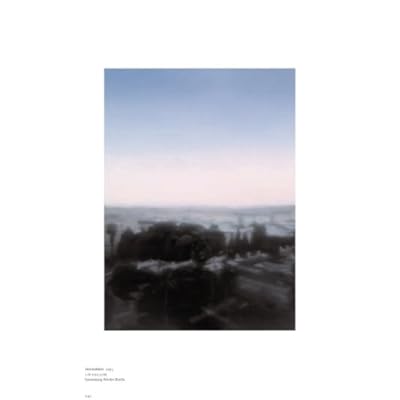
If the 80 or so art works were not seen together in this book, you might not recognize them as done by the same artist they are so diverse. There's figures and abstract art; a few works with pronounced, though not assertive, realist qualities; and one installation-like work. Coloring ranges from vivid, jazzy, primary colors to muted grays. There's persons in some, buildings in others, and a few are nature scenes. But they are all works by the German artist Gerhard Richter (born 1932) who has gained international fame. The book is a catalog relating to a major Richter exhibition now at the National Gallery Complex in Edinburgh, Scotland thru January 2009. After this, it is scheduled for Vienna and Duisberg, Germany.With Richter, such diversity does not token stages of development; nor--surprising as it may seem--experimentation. Rather, the diversity reflects different versions of excellence by a consummately skilled, inexhaustibly curious artist perfectly, ideally, and conceptually in tune with the capricious ways of the times. Whereas this results in mere fickleness, impulsiveness, or petulence with ordinary persons, the master artist Richter can brilliantly turn his inventory of skills, knowledge of forms, and mystic-like sense of the contemporary social and psychic airs to the creation of varied works.The fabric connecting them all is a deftness and polish--which is the quality by which a Richter work is recognized. Nearly all of the works have some modification of technique, often in the style of a fracture or mutation. With the figures, this is usually a degree of blurring; with some of the abstracts, a seemingly wayward expressionist touch; with the abstract works which have a collage-like mix of forms, a contemplative tone rather than an anarchic polyglot of shapes and images. While not an iconoclast or inventor as for most modern artists who have gained such notice and stature, Richter nevertheless works against the conventions of the forms and styles he works within without ironically trying to expose their arbitrary foundations or destroy their presence or history. This imbues a subtlety in his works--another signature quality distributed through the diversity.As Gotz Adriani remarks in the first of two essays introducing the catalog, Richter's works are "not really concerned with the proscriptions accumulated over the years by the series of artistic revolts..."; but rather with the same "unmistakable painterly qualities [that] are demonstrated by references to works by Titian [and] Vermeer." Adriani also remarks that Richter's paintings have a "very private character [that] could take some time to get used to"--i. e., take some time to recognize and apperceive with their subtlety amid their range of styles and subjects.In the following essay, Dieter Schwarz uses a quote from Nietzsche to grasp the constant, but faint essence of Richter's art. The Nietzsche quote goes in part, "...to read a text as text without the interference of an interpretation is the latest-developed form of 'inner experience'." This is one way of seeing the purity of expression of Richter's paintings; which is the essential quality unifying them all.