Rock Chronicles: Every Legend, Every Line-up, Every Look
Category: Books,Arts & Photography,Music
Rock Chronicles: Every Legend, Every Line-up, Every Look Details
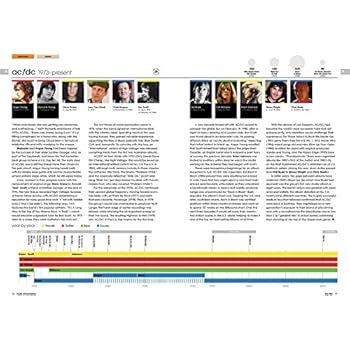
Review The subtitle aptly describes the scope of this encyclopedic survey of 250 rock acts. Find out who won what award, who played on what release and how every band broke up--or stayed together. Plus, excellent graphs that condense key info, and, of course, a ton of pics. (NOW Magazine 2015-12-23)[Review for previous edition:] More than 250 legendary rock 'n' roll bands (and more than 1,750 individual musicians) are profiled in this unique book... One- or two-page entries feature color-coded charts showing the core members of each band, their roles, and the time periods they were active... Readers can use this book to identify who was in what band, when, as well as find out who played on various studio albums. Fifty top bands (such as the Beatles, the Rolling Stones, and the Who) get an additional two-page spread of color photographs. Numerous cross-references abound, and an index lists all of the performers noted in the book. An absolute must for any rock-music fan, this book would make an excellent addition to circulating collections. (Rebecca Vnuk Booklist 2013-02-01)[Review for previous edition:] Well-written and up-to-date ...this book will be a welcome and heavily used addition to any rock 'n' roll buff's library. (Brett Rohlwing, Milwaukee Public Library Library Journal 2012-12-01)[Review for previous edition:] For the music aficionado on your holiday shopping list, Rock Chronicles might fit the stocking. (Kevin Amorim Long Island Newsday 2012-11-14)[Review for previous edition:] An encyclopedia for the rock music fanatic. (Louisville Courier-Journal 2012-12-22)[Review for previous edition:] For music lovers who are fascinated by details, this extensive collection will certainly appeal. (Terry Peters North Shore News 2012-12-09)[Review for previous edition:] The year-in, year-out grind of rock stardom is meticulously mapped in this prosaic encyclopedia of notable bands. The AC/DC-to-ZZ Top selection includes 250 groups from the classic rock era and later...comprising all the familiar names along with influential obscurities... Colorful graphics detail album releases, sales figures, and shifting rosters of bandmates... Casual data-mining reveals striking patterns: rock music is almost as male-dominated as pro baseball; bands are such onerous workplaces that their members can't wait to quit; and they always come back for sexagenarian reunion tours.... Will introduce browsers to music they hadn't realized they would like. (Publishers Weekly 2012-03-12)[Review for previous edition:] This alphabetically arranged encyclopedia offers opportunities for quick reference and casual browsing. (John Peters, Children's Literature Consultant School Library Journal 2012-12-01)[Review for previous edition:] A must-have if you love music. (Shelf Life)[Review for previous edition:] Rock Chronicles will fascinate any fan of music trivia. (Francois Marchand Vancouver Sun 2012-12-15) Read more About the Author David Roberts has edited more than 20 music reference book projects at Guinness World Records, including British Hit Singles and Albums and Rockopedia. He is also the author of Rock Atlas: 650 Great Music Locations and the Fascinating Stories Behind Them. Read more Excerpt. © Reprinted by permission. All rights reserved. Foreword by Alice Cooper Rock 'n' roll is over a half a century old. The British Invasion is forty years old. If you're around seventy right now, you were probably a Beatles or Rolling Stones fan. Why does this music keep going on? Most of the bands from the fifties and sixties are still touring and making records. Is there something magical about this music, or is it just a refusal to grow old? I'm starting to think it's a psychochemical reaction. Rock 'n' roll is all about attitude and image. It's mostly blues-based, and it's akin to an ongoing rebellion against the safe, conservative, acceptable music that our parents and grandparents wanted us to appreciate. Since most of these artists refuse to die or simply fade away, here's a book about what they did then, what they're doing now, and what they might do later. And even though I have a lady's name, the old adage "it ain't over till the fat lady sings" will never ever apply to me, since I'll never be fat and I'll never quit singing. Long live rock 'n' roll -- rock 'n' roll is NOT DEAD. You might want to take your own pulse. If it's too loud, maybe you're dead. Introduction by David Roberts Rock Chronicles is a new way of telling the story of this powerful and enduring genre. More than 250 of rock's finest, spanning seven decades, get an in-depth examination, presented in a unique and revealing display that starts and ends with archetypal purveyors of classic rock: AC/DC and ZZ Top. Along the way, you'll be introduced to the personnel who created subgenres, from glam to grunge and psychedelia to punk. A new kind of rock encyclopedia for the twenty-first century, the book features elements that give a visual overview of each act's long and winding career. A team of experts has compiled the essential biographies found at the core of each act's entry -- together with the birth and, sadly, ever increasing death dates of the cast of many hundreds of rock stars. So far, so traditional. But this is where the similarity to other rock encyclopedias ends. Rock Chronicles boasts at-a-glance graphic timelines of the comings and goings of group members set against the albums they made and the labels that signed them. These cleverly designed infographics will help you to pinpoint the key moments in rock history: when line-ups changed, breakthrough albums were released, record deals were brokered and singers departed. Want to know who played drums on Pearl Jam's debut album? Find out how many copies OK Computer has sold worldwide? Remind yourself what The Kinks' bassist looked like or when Frank Zappa was inducted into the Rock and Roll Hall of Fame? You'll find all the answers to these and an unimaginable stack of other questions in the fact-packed pages of a very different kind of book. Delving into Rock Chronicles, you will undoubtedly, like me, learn all sorts of trivia. Not facts that you would necessarily look up, but good-to-know, intriguing stuff like the simple story behind how Canadian stars Nickelback got their name and the bizarre fact that French progressive rockers Magma have invented their own lyrical language. Away from these intriguing diversions, let's answer the big questions most of you will consider when using a rock encyclopedia. First, just how did we make the selection as to which acts are included? Not without a huge amount of thought, debate and argument is the unsurprising answer. The issue of what constitutes a rock act at all, as opposed to a pop outfit, is enough for starters, before determining who fits the bill. At the heart of most decision-making was the symbol which very firmly dominates the front cover of this book: the electric guitar. Synths made a half-hearted attempt to usurp the guitar in the seventies and eighties, but the definition of a classic rock band is built around the six-strings of Chuck Berry through to present day Kings of Leon. So, having established a very basic definition, who of the thousands of potential bands to choose and who to lose? Your list and mine will be different, I'm sure, but there's no exact science in deciding who makes the final cut. Highest record sales and best chart statistics just won't do. That way leads to the omission of so much music that is commercially lacking but creatively inspirational. So, fear not, Captain Beefheart and His Magic Band, the Buzzcocks and Pavement all have their place. That said, all the British, Irish and North American rock heavyweights you'd expect to see are included, plus significant acts from across Europe, China, Japan, South America and Australasia. To get the most out of the book, start by checking out the visual guide to Rock Chronicles (overpage). Here you can get acquainted with the timelines that run throughout the book and the symbols and graphic devices used to reveal the vast amount of information at your fingertips. Each timeline covers the period each act has been active, punctuated by core members (and, in the case of solo acts like Bowie, Elvis, and Neil Young, significant others), together with a full chronological rundown of studio albums. All compilations and soundtracks, and most live albums, have been excluded to keep discographies to manageable proportions, but exceptions have been made where the entries would be simply incomplete without them. Fear not, fans of the MC5, Dave Matthews, and Jane's Addiction: those live debut albums are in here. And in a few selected cases -- notably Tangerine Dream and Frank Zappa -- we have cherry-picked highlights of their huge back catalogs, including live albums (which fans of those acts regard as equally canonical). All types of album -- studio, live, and compilation -- qualify for the big four sellers at the top of each double-page spread. A great deal of research has gone into establishing the most accurate estimate for each release. Record sales are often prone to much exaggeration but our figures are based on a combination of expert advice and record industry certifications for platinum, gold and silver sales or shipments. These certifications are given per disc, not per album release -- so in the case of George Harrison's terrific triple album, All Things Must Pass, the often reported sales total of more than ten million is, in fact, 3.5 million. The all-important rock stars highlighted in the biographies and on the timelines are pictured on each page for easy identification. For a selection of the more visually exciting and most enduring bands, there are picture features that show the visual changes undergone throughout the decades of fashion changing, hard rocking, touring and general debauchery associated with the "hope I die before I get old" brigade. These are color-coded to key albums, also pictured on those spreads. Every decade since the seventies has seen predictions of the death of rock. Although the twenty-first century has seen a slow-down in the production line and recorded products have a looser grip on us than they once did, rock is still a massive draw for the buoyant live performance sector. It's also pop music's most fascinating genre to read about -- so immerse yourself in the astonishing wealth of fact that is Rock Chronicles. Read more



Reviews
Good overview of classic rock bands and more modern ones. Good way to introduce you to new bands. However there were factual errors. Example: A band I knew much about, the original Alice Cooper band. The authors put guitarist Glen Buxton's picture under drummer Neal Smith's name and vice versa. They did this twice. Authors also stated that the original Alice Cooper musicians attempted to start a new band without Alice called Billion Dollar Babies in 1977 but they were sued to stop; but this was not the case at all. Nobody cared that the musicians created this band. It failed due to poor management and planning and bad luck. This was well documented in Mike Bruce's book No More Nice Guy. Funny that there were so many factual errors under the Alice Cooper entry and Alice introduces the book. I guess he never read the entry for Alice Cooper or didn't care about the details.