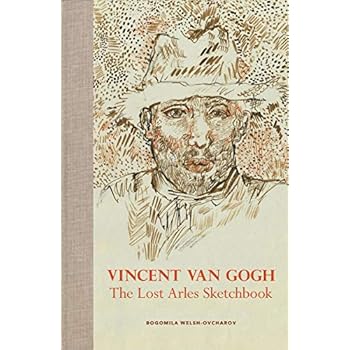
Vincent van Gogh: The Lost Arles Sketchbook
Category: Books,Arts & Photography,Individual Artists
Vincent van Gogh: The Lost Arles Sketchbook Details
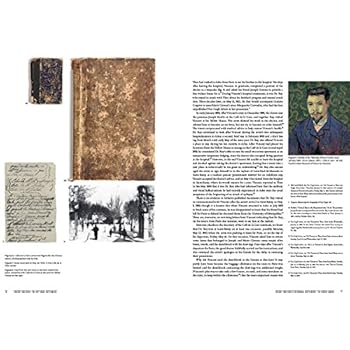
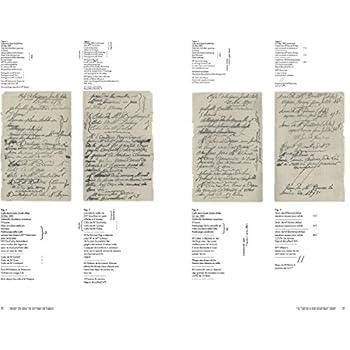
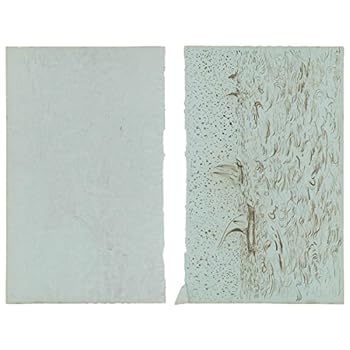
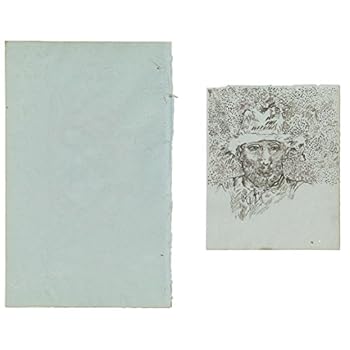
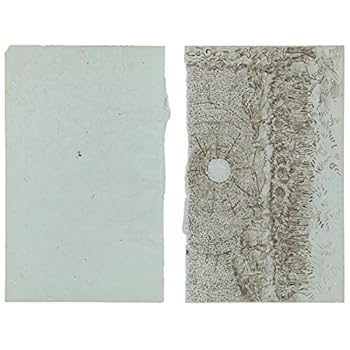
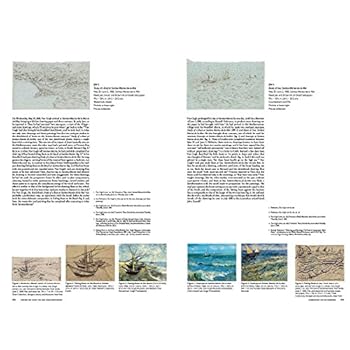
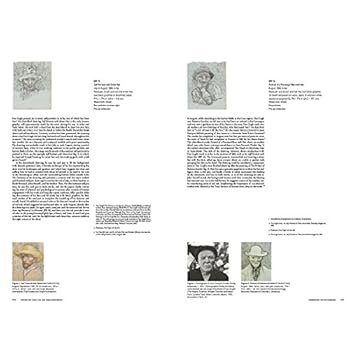
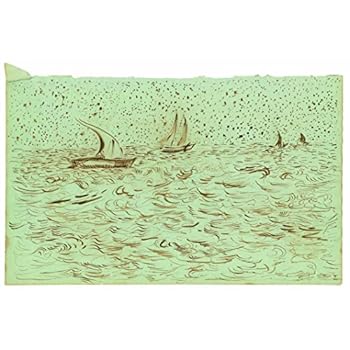
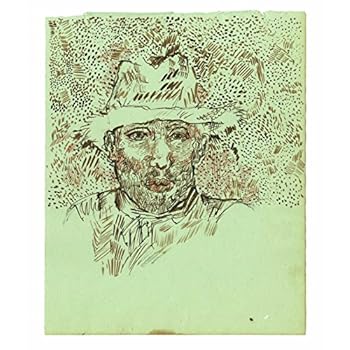
Review “The book also is a fascinating showcase of van Gogh’s stylistic means, the rudiments of his artistic vocabulary – dots, dashes, sinuous lines, cross-hatching, patterning, confetti-like sprinkles – and a celebration of his mastery of the humble reed pen.” (The Globe and Mail) Read more Book Description The most revolutionary discovery in the entire history of Van Gogh’s oeuvre. Not one drawing; not ten, not fifty, but sixty-five drawings.” —Ronald Pickvance, from the Foreword Late in life, during his time living in Provence, Vincent van Gogh kept a sketchbook within a humble account ledger given to him by Joseph and Marie Ginoux, the owners of the Café de la Gare in Arles. This artifact of incalculable historical and aesthetic value remained hidden for more than one hundred and twenty years. It reappears today as a revelation and an extraordinary treasure. Published in this volume for the first time, Van Gogh’s lost sketchbook tells a riveting story. Over two tumultuous years in the artist’s life, he drew sixty-five sketches, including landscapes, still lifes, portraits, and a self-portrait, within the ledger. These priceless drawings provide insight into the last years of Van Gogh’s life, just before his fatal stay in Auvers-sur-Oise, and a new understanding of his most famous paintings, such as The Yellow House, The Night Café, and The Starry Night. With meticulous analysis of the sketchbook and the historical record, art historian Bogomila Welsh-Ovcharov discusses each drawing in terms of Van Gogh’s career as a whole, and in particular during his time in Arles and Saint-Rémy-de-Provence between February 1888 and May 1890. This groundbreaking book includes facsimile reproductions of all the sketches and is richly illustrated with dozens of drawings, photographs, and paintings that situate the sketchbook in the context of Van Gogh’s life’s work and the history of art. The result of a remarkable discovery, Vincent van Gogh: The Lost Arles Sketchbook offers fresh insight into the life and work of one of the world’s most beloved artists. Read more About the Author Bogomila Welsh-Ovcharov is professor emeritus at the Fine Arts Department of Erindale College at the University of Toronto (Canada). She is an internationally acclaimed art historian who curated two major exhibitions in 1981 on the connection between the work of Vincent van Gogh and that of contemporary artists, including Vincent van Gogh and the Birth of Cloisonism (Art Gallery of Ontario and the Van Gogh Museum in Amsterdam), as well as the inaugural exhibition at the Musée d’Orsay, Van Gogh à Paris, in 1988. She is guest co-curator and coauthor of the catalogue of a large exhibition, Mystical Landscapes: From Van Gogh to Emily Carr, at the Art Gallery of Ontario (2016) and the Musée d’Orsay in Paris (2017). Ronald Pickvance is an eminent Van Gogh scholar and the author of numerous publications on Impressionism and Post-Impressionism, including English Influences on Vincent van Gogh, Van Gogh in Arles, Van Gogh in Saint-Rémy and Auvers, Van Gogh, Gaugin and the School of Pont-Aven, Manet, and Degas. His curations of Van Gogh’s work have been exhibited at The Gianadda Foundation in Martigny, Switzerland; The Metropolitan Museum of Art in New York; and The Art Institute of Chicago. Read more


Reviews
I wish I could return this book. None of us are experts, so none of us can say for certain either way, no matter what our opinion is comparing these drawings to ones in other publications. Even the experts are in harsh disagreement, and the Van Gogh Museum makes a strong case against them. I am surprised Abrams would launch into this without more exhaustive tests and discussions with the museum. What? And lose sales to all of us anxious Van Gogh lovers? Yes or no, real or not, the publication/sketchbook is under serious question, and it has certainly ruined the enjoyment of it for me.UPDATE: I apologize for my first review. It turns out one CAN compare these to publications of actual Van Gogh drawings and see quite clearly they are fake. I traveled to the Manton Research Center at the Clark Art Institute in Williamstown and put a stack of thirty books from their extensive Van Gogh catalog on a table and spent the entire day reading, looking and comparing. Wow. On his worst day, Van Gogh did not, and could not, draw this badly. His drawings and sketches from his time spent at the hospital are better than anything here. I was able to find images of drawings in a 1928 catalog that no longer appear in modern publications because they are now in private collections; all pointing to the fact that by Arles, he had become a great draftsman.Lastly, as was already stated by the experts at the Van Gogh Museum, I found no mention of the book or the drawings in any of his correspondence. Another fact more solid than a note written in a day book that may be fake itself. He carried small sketchbooks, as was the custom then. If he was working in a larger one, I doubt he would have kept it to himself. And an artist gives away a sketchbook??? Seriously?That aside, I can understand two life-long scholars wanting something so badly that they convinced themselves and in turn were blinded by the images in front of them. The greater part of the blame must be lie with Abrams. Did whoever headed up this project travel to the Van Gogh Museum and speak in person with experts there who have denied this from the start? Did they not do what we (with our untrained eye it seems) have done, and by mere comparison come to the same conclusion?I see what one other insightful reviewer offered up as the first art publication to honor the Post-Truth Era.